Writing an email in the A2 Czech exam doesn’t feel easy to anyone. For most people, it actually feels brutally hard — even if their Czech is otherwise quite good. We simply don’t write that much… That’s exactly why so many candidates lose points on things that are completely avoidable. In this article, I’ll show you the most common mistakes in writing in A2 exam for Czech permanent residency (if you want to see how the rest of the exam looks like, check out my complete guide).
Everything here applies not only to the current exam, but also to the new A2 exam format introduced from April 2026. The tasks may look slightly different, but the expectations (and the traps) stay the same.
Let’s do it!
Watch the video and then check out the examples below, or just read the post if videos aren’t your cup of tea or you’re not willing to be forgiving of the quality of my first video ever (it was a labor of love! :D).
The Czech Alphabet: You may be writing it wrong, even if you don’t feel like it
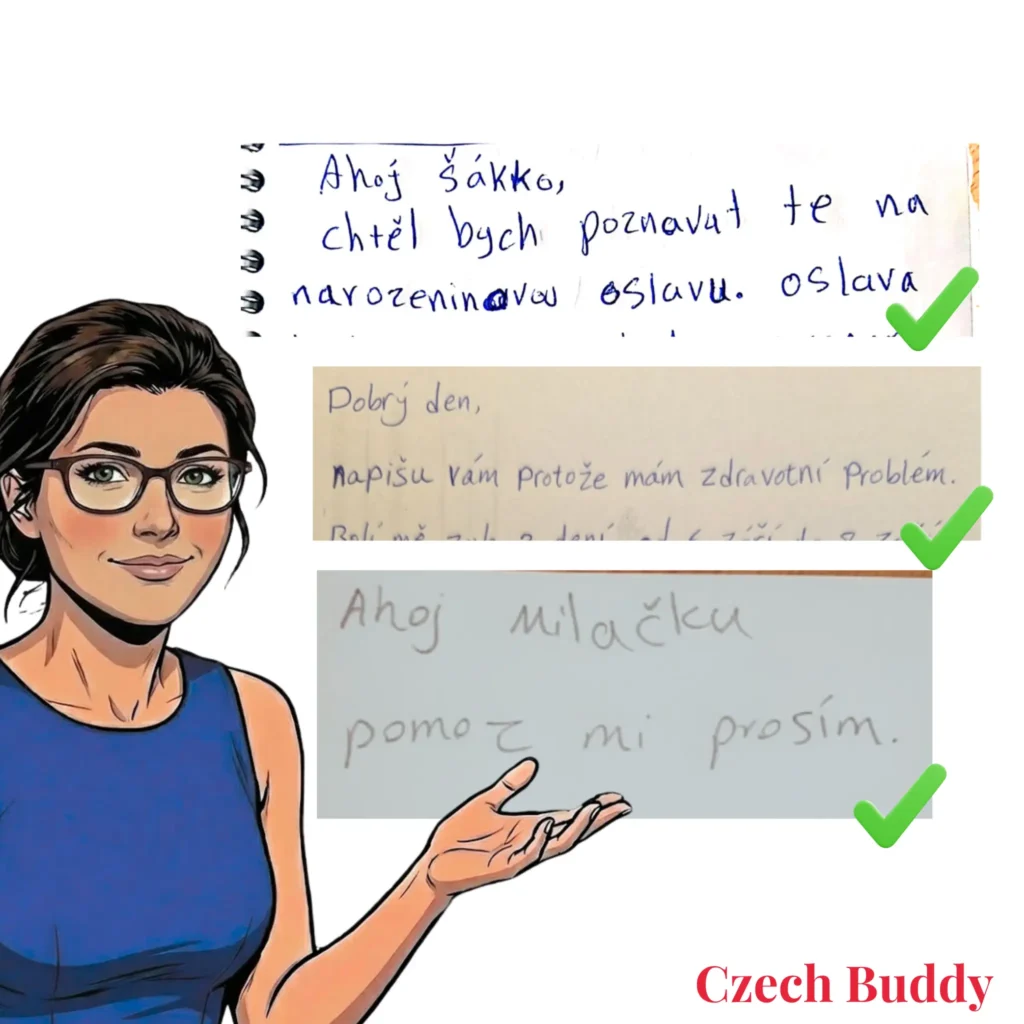
This point is especially crucial if your first language doesn’t use the Latin script! Mastering the script and writing letters correctly is the absolute baseline (as it is A1 thing). At the A2 level, you simply cannot afford to make mistakes here.
When you practice, ask someone to check your text—but ask them specifically to focus on the shape of your letters and the script. A person can understand what you meant to write even if the handwriting is flawed (our brains fill in the gaps!). But “readable enough for a friend” is not enough for the exam. The examiner needs to see precise shapes and clear script.
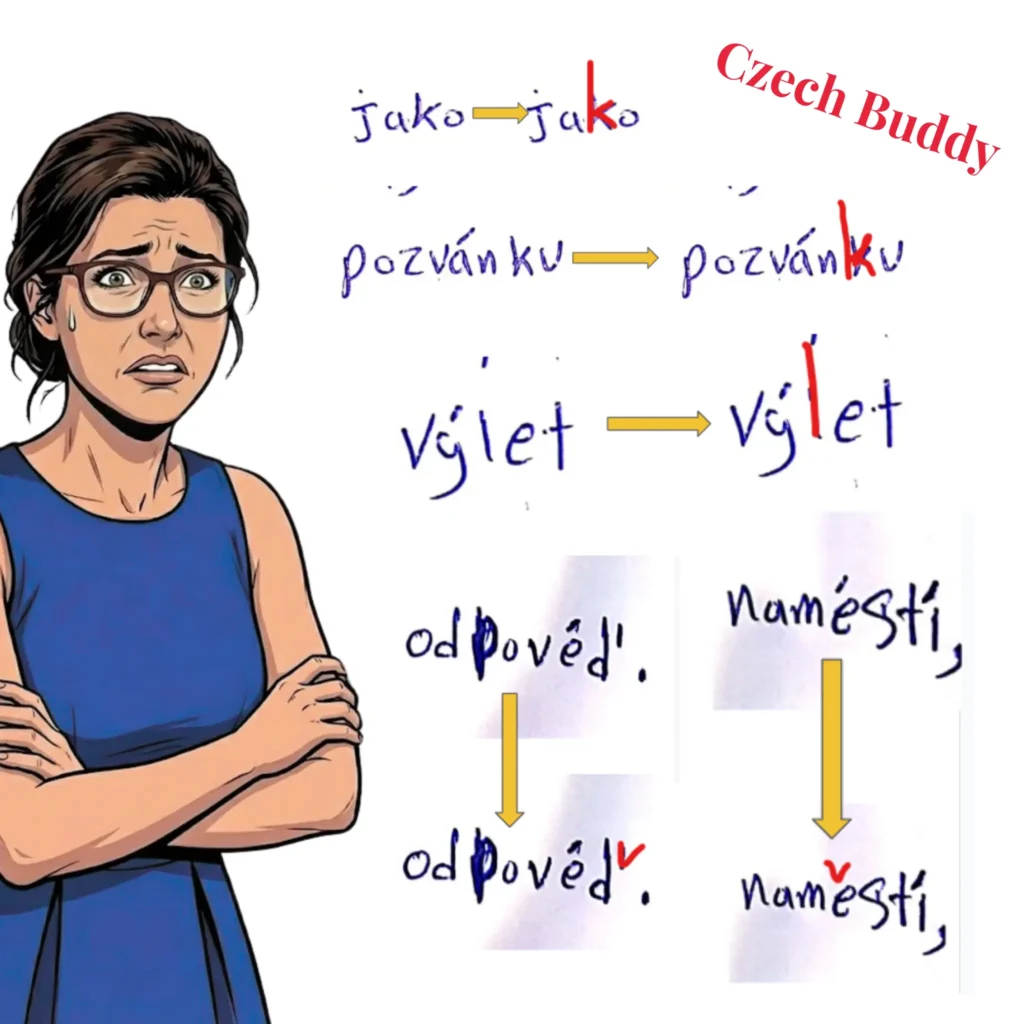
Even if you are comfortable with the Latin script, don’t let Czech specifics catch you off guard:
- Accents (háčky & čárky): They aren’t optional! They must be written on the correct letters and have the correct shape. On the other hand, you can make mistakes without point deduction – so don’t stress too much over each and every word, but focus on having háčeks and čárkas correctly written somewhere.
- The Tricky Trio (ď, ť, ň): Pay close attention to how the “háček” changes shape or position in different words (for example, look at the difference between síť vs. sítě).
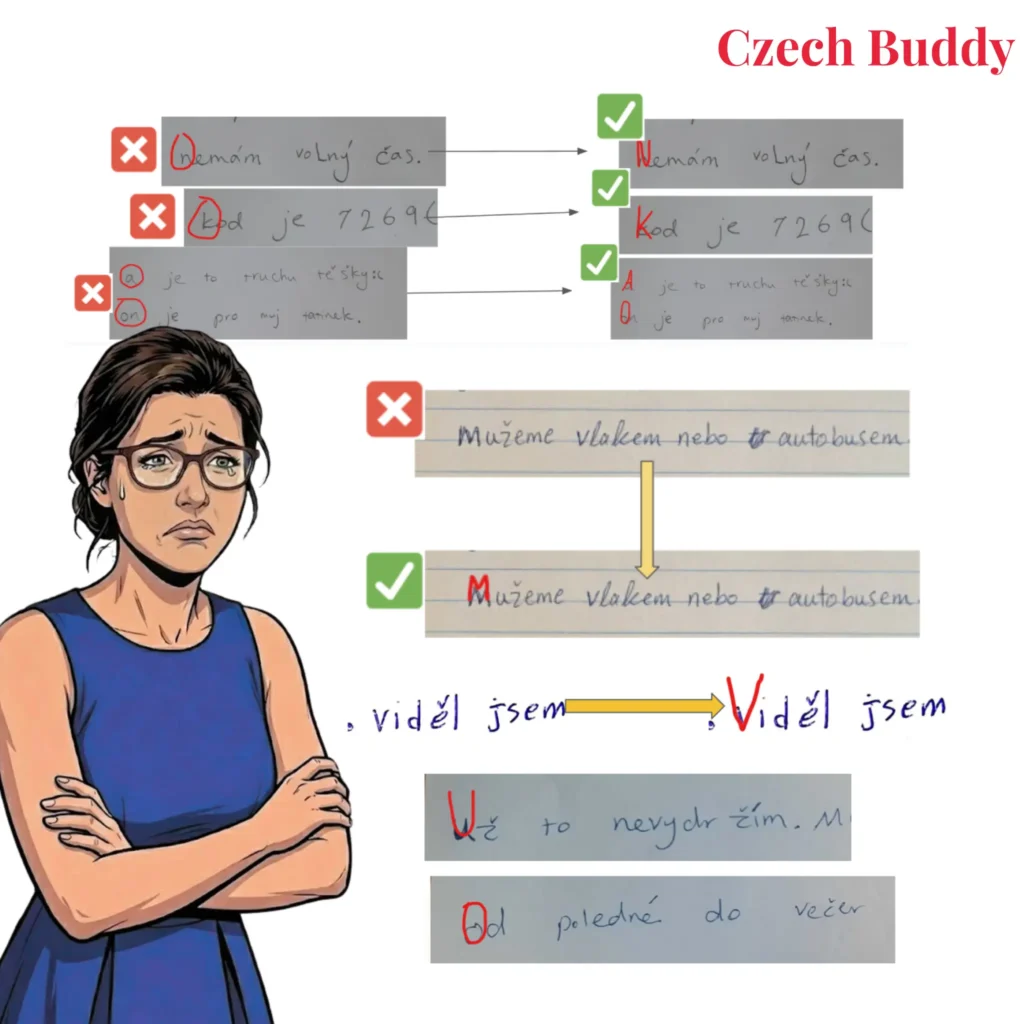
Uppercase & Lowercase Letters: It must be obvious at first glance!
Czech has clear rules for capitalization, and the exam committee takes them seriously. Remember, a sentence always starts with a capital letter, as do names of places, cities, and people (and other propper name).
Make sure that it is clear for each letter whether it is lowercase or uppercase!
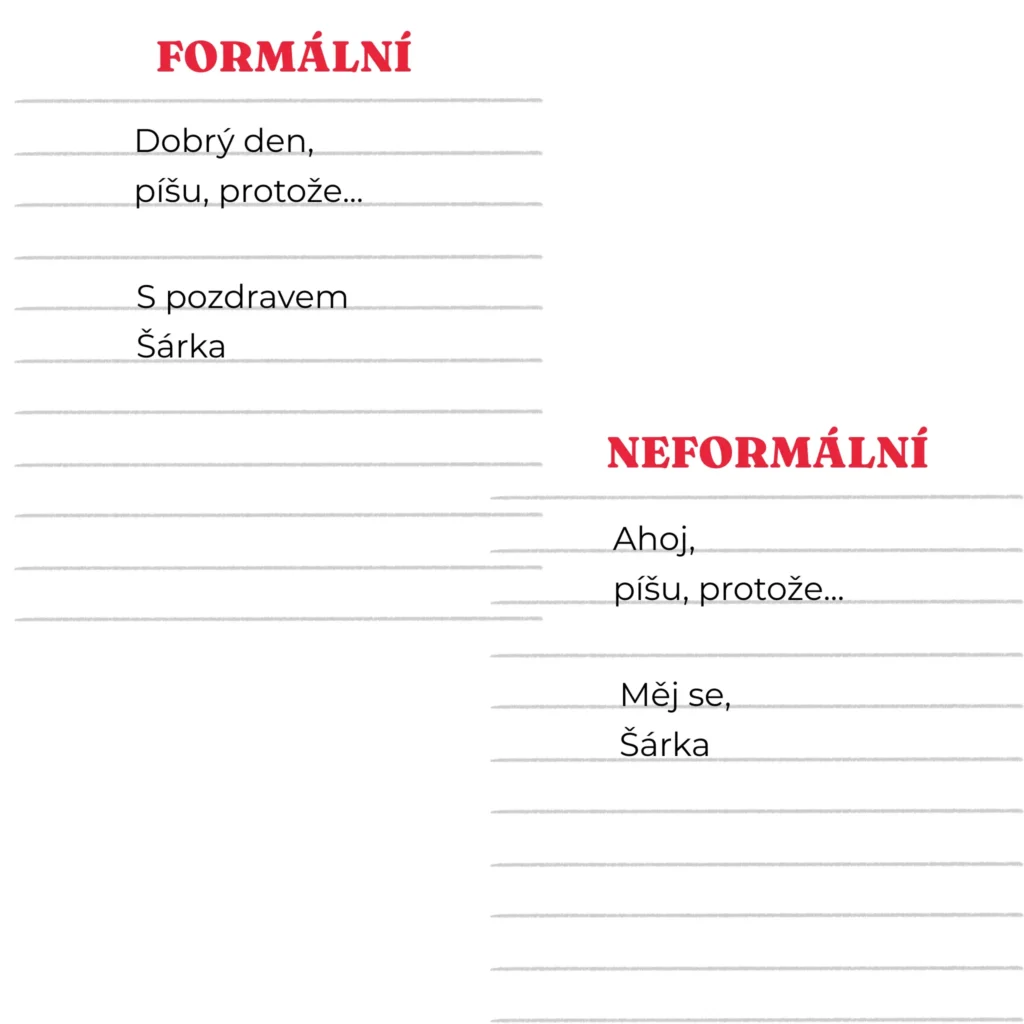
Formal & Informal Czech: Consistency is the key
When writing e-mail, choose the appropriate language form for the situation, whether formal or informal. Use suitable phrases at the beginning and end of emails and pay attention also to verb forms (děláš versus děláte) and pronouns (ty versus vy).
The first sentence: Why are you writing?
Start your email with an introductory sentence explaining why you’re writing. This will help with the length and meeting the required scope. For example, the phrase Píšu, protože potřebuju termín u doktora. (‘I’m writing because I need an appointment with the doctor.’) helps ensure you meet the word count limit.
If you can’t write an opening sentence, you will lose a point.
(One point won’t make you fail the entire exam, so there’s no need to panic about it.)
Don’t Ignore the Assignment!
You must address all tasks outlined in the exam prompt. Don’t forget about the five main points and the associated images. If you’re required to mention where you meet and fail to include it, you lose points.
After completing your text, review it carefully. Ensure you’ve answered all questions. This strategy helps you avoid needless point deductions and increases your chances of success.
Be careful — if you leave something out, you can easily fail another important requirement: the length of the text. If your email is only slightly too short, you will lose points. If it is much too short, you will get zero points for the task.
If you can’t quite picture what I mean or how to approach it, feel free to download my guide for free — including real examples. 🙂
Mistakes in Writing in A2 Exam: How to avoid them
Download my A2 writing guide, where you’ll find examples of both good and bad texts for both writing tasks in the permanent residency exam — for the old as well as the new exam format.
It’s free, and you can find it right here.
